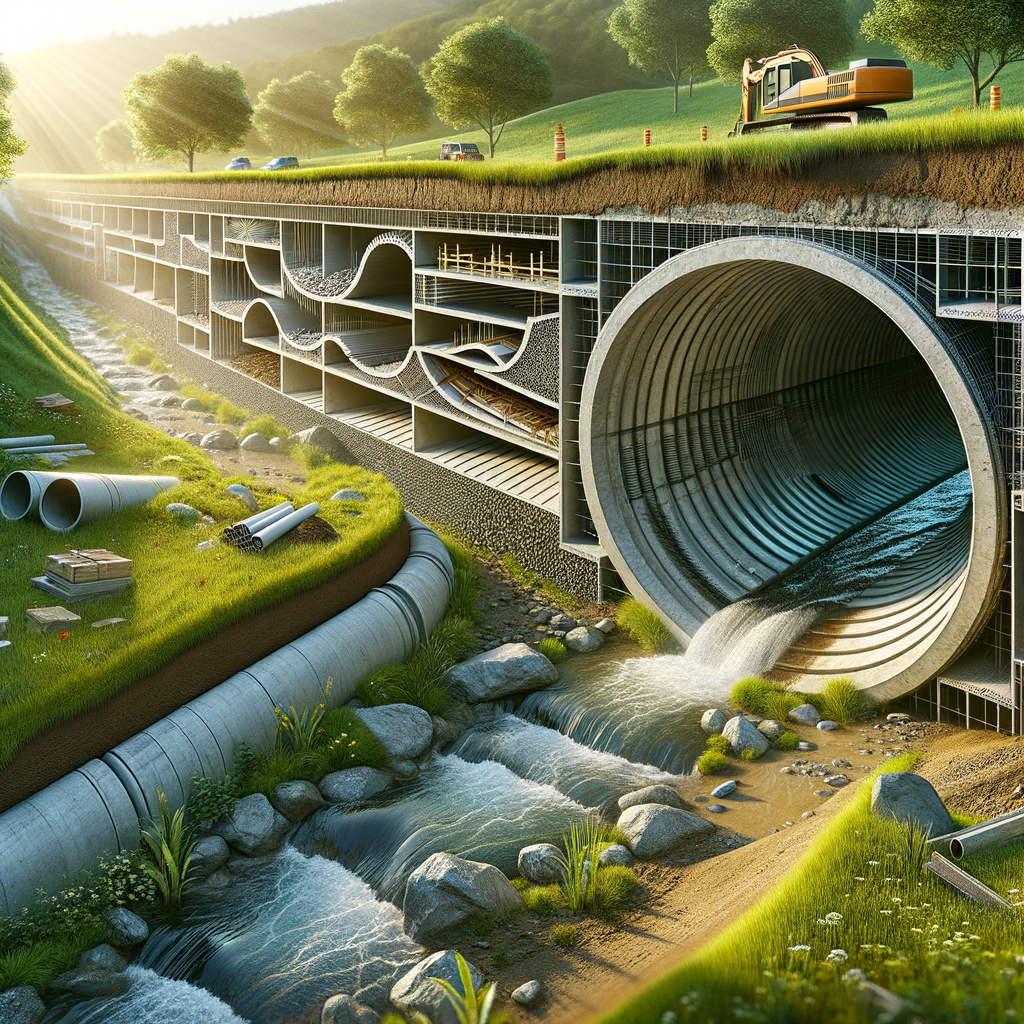
Culvert Design Essentials for Effective Drainage Systems
In the intricate web of our infrastructure, drainage systems play a pivotal role in maintaining both functionality and safety. Among the various components, culverts stand out as crucial elements that facilitate the smooth flow of water through roadways, bridges, and embankments. This blog delves into the essentials of culvert design, shedding light on their significance, components, design considerations, and best practices to ensure an efficient drainage system.
Understanding Culverts
A culvert is a structure that allows water to flow under a road, trail, or similar obstruction from one side to the other. Properly designed culverts are essential for channeling water efficiently, preventing erosion, and ensuring the durability of infrastructure. Here’s why culverts are important:
- Flood Prevention: They reduce the likelihood of flooding by managing stormwater runoff effectively.
- Soil Conservation: Prevents soil erosion around roadways and embankments.
- Habitat Protection: Facilitates the movement of wildlife and maintains natural water flow.
Key Components of Culvert Design
Understanding the critical components of culvert design helps in creating a system that meets its intended goals:
- Type of Culvert: Common types include:
- Pipe Culverts
- Box Culverts
- Arch Culverts
- Material: Options range from concrete and steel to plastic and aluminum, each with its own advantages and drawbacks.
- Size: Proper sizing is crucial to ensuring that the culvert can handle anticipated water flow.
- Location: The culvert should be strategically placed to optimize drainage.
Design Considerations
Effective culvert design requires careful consideration of various factors to ensure optimal performance and longevity. Key design considerations include:
- Hydrological Analysis: Analyze rainfall patterns and drainage basins to assess the expected water volume.
- Soil Conditions: Evaluate the type of soil and its permeability to determine the appropriate culvert type and material.
- Environmental Impact: Consider biodiversity and ecological balance—designs should facilitate fish passage and preserve natural habitats.
- Maintenance Accessibility: Design culverts that allow for easy access to enable regular inspections and maintenance.
Best Practices for Culvert Design
Implementing best practices can lead to effective culvert design that enhances both functionality and sustainability:
- Use Adequate Flow Capacity: Calculate flow capacity accurately to prevent overflow under peak conditions.
- Promote Natural Flow: Design culverts that mimic natural stream conditions to support aquatic life.
- Regular Maintenance Checks: Implement a maintenance schedule to monitor culvert condition and clear potential blockages.
- Incorporate Erosion Control Measures: Use riprap or vegetation at culvert outlets to minimize erosion.
Conclusion
In conclusion, culverts are not just functional installations; they are vital components of our infrastructure that require thoughtful design and careful management. By adhering to the essentials of culvert design outlined in this blog, engineers and planners can create effective drainage systems that stand the test of time, protect our environment, and contribute to public safety.
As we face increasingly unpredictable weather patterns and environmental changes, the importance of capable drainage solutions will only grow. Therefore, embracing innovative designs, sustainable practices, and regular maintenance is essential for nurturing our infrastructure and the ecosystems it supports.
Let us strive to build a resilient future, one culvert at a time!